Sunday, November 07, 2021

Presidente 2022-2029

Dunque, fra qualche mese, si aprono le elezioni per il presidente. Direi che anche questo gruppo si comporterà di conseguenza, per eleggere il presidente tra i suoi membri.


Secondo le ultime indiscrezioni, due possibili figure si delineano all'orizzonte: una è quella del chiarissimo prof. B.aglioni, che gode di un consenso trasversale nell’ala istituzionale del gruppo, con un approccio moderato, ed un endorsement importante: “Dovrà decidere lui se vorrà candidarsi o no, se il suo contributo è migliore da presidente o da voce autorevole non istituzionalmente impegnata" dice un grande elettore che non vuole che venga pubblicato il suo nome. Sulla sua candidatura, forse, l'inciampo potrebbe venire dai numerosi impegni istituzionali che già sono sul suo tavolo. "Quindi, oltre allo stipendio, gli paghiamo pure le missioni per la Serenissima?" dicono i duri e puri, tradendo una insofferenza per l'accumulo di cariche. 


Sullo sfondo, invece, si muove l'ala indipendentista del gruppo, che punta sul prof. B.arone-A.desi, sulle ali della rinnovata autorevolezza riconosciuta nella fase pandemica. Non proprio una candidatura istituzionale, visto anche un vecchio dossier che ricorda frequentazioni pruriginose. Ma l'accademico tende a sminuire: "di acqua ne è passata, saremo giudicati sull'amore" dice il prof, strizzando l'occhio, da lontano, all'ala cattolica.


"E una presidentessa?" è il refrain di una fetta consistente dei due emicicli virtuali. E allora la testa va subito alla dott.ssa S.aura, che di coordinamento e concertazione certamente si intende. Certo, i birthers della destra storcono il naso, ma sembra una polemica sterile. Forse, l'unico elemento che potrebbe rendere più accidentata la sua candidatura, è la sequela di impegni che la vedrebbero coinvolta. ma l'eventuale first gentleman sgombra il campo da qualunque dubbio in tal senso: "Tutto il supporto da parte mia, e anche oltre. Non c'è Juve o padel che tenga". Bisognerà vedere se, nel segreto dell'urna, il vecchio vizio maschilista faccia comunque capolino. 

Non sembra invece decollare il consenso per l'ayatollah della sostenibilità F.asanelli, che ha dalla sua ormai solo l'anzianità. Sarà certamente candidato di bandiera, ma è molto difficile che possa scalfire il blocco istituzionale, anche in considerazione delle posizioni fastidiose per larga parte dell'elettorato. "Al Quirinale vogliamo davvero uno che sale sui tetti?" è la voce che sempre più spesso sembra levarsi da larga parte dei grandi elettori. 

Certo è che, per raggiungere quella metà più uno, ogni voto è importante, anche quelli degli eletti dagli italiani all'estero, in Europa continentale, come attorno all'equatore americano. Vedremo quali saranno le capacità di aggregazione delle diverse figure, nelle prossime settimane...

Monday, August 29, 2016

Olympics (in)equality...

It's not September yet, and this basically means that we are still able to discuss about sports without being totally focussed on the game that drags most money (yup, that's association football, you can have a look at it here, and add up the four foremost leagues).
Quick recap: we are going to use the same boring index of inequality we have already used in the past (see e.g. here).

Now, for a change, this will be applied to the total number of medals collected by each country at the Summer olympics across the editions. We will start from 1960 (this is for soul-related reasons...), and consider all the participating countries.

And guys, we have something good coming from Rio 2016: it's been more than 50 years since the Gini coefficient was this low. This means that the distribution of medals among participating countries, despite the increasing presence of golden eater empires, has been more, let's say, equal.
If we combine these figures with the fact that the number of countries who participated reached its maximum with Rio 2016 (207), and that the share of the "De Coubertin-ian" countries (i.e. those that do not capture any medal at the Olympics) is at its lowest level since 1980 (less than 58%, in Moscow it was 55%, when, however, the number of participating countries was heavily impacted by boycott), we could speculate that if you participate to the games, it won't be a mirage to get rewarded soon.


Wednesday, June 29, 2016

Ma che ci fai con la palla?

Complice la festa dei patroni di Roma, un divertissement di analisi dati sulle partite di Euro 2016 (sì, lo so, è una malattia...).


Allora, il grafico riporta in ascisse il valore economico medio di ogni squadra, mentre sulle ordinate abbiamo il tempo passato da ogni squadra con la palla in possesso in  attacco. Il market value predice questo parametro meglio di altri (numero di tiri in porta, percentuale di possesso, ...).
Ragionevole: chi ha giocatori che valgono di più, tende ad avere la supremazia di gioco. Ora, se calcoliamo la regressione (R2 discreto, ha un senso), avremo un certo numero di squadre che si troveranno al di sopra della retta di regressione, ed altre sotto.
La cosa interessante è che le squadre che si trovano al di sopra hanno, ad oggi, avuto meno successo (fino ad ora) rispetto alle altre: in qualche modo, le squadre che sovra-stimano la capacità di essere dominanti in campo sono state punite. Le altre, in media, hanno avuto più successo. Direbbe il maestro Arrighe, "umilté...".

Saturday, April 04, 2015

Dov'è l'oste?

[AVVERTENZA: questo è un post un po’ con i capelli bianchi, un po’ “ai miei tempi”, e non parla necessariamente di sport; gli ayatollah del nuovismo possono subito passare oltre]

Niente, poi arriva pasquetta, e si cerca un posto dove andare a mangiare: Oltre, Gusto, Dolce, Lievito, Rosti, …
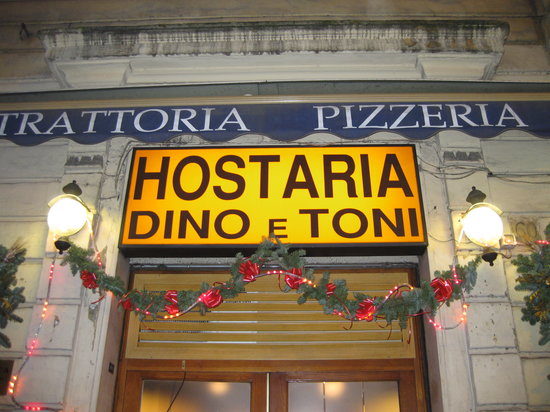
Ecco, mi  sono reso conto solo ora di un cambio impressionante degli ultimi venti anni: i ristoranti non hanno più nomi di persona. Prima c’era Gnegno, Edmondo, Dino e Tony, la Sora Lella. Insomma, un nome  proprio, che ti ricordava che c’era un oste, una persona che apriva la sua cucina agli altri, a cui ti sentivi chissà perché in diritto di dare del tu, che mandavi a quel paese se non t’aveva fatto mangiare bene, e che però ricordavi come un amico noto agli amici per consigliare un posto dove si mangiava bene.
Ora no, ora comanda la sensazione eterea del concept, quasi come se un posto non debba appartenere, ma solo essere sentito, nemmeno toccato. E se ti viene da consigliarlo ad altri, questo diventa quasi impersonale, quasi slegato al vissuto, perfetto per il tripadvisor.
A proposito, tra i primi 600 ristoranti di tripadvisor (ordinati per recensione), il numero di quelli che sono riconducibili al nome di un oste è inferiore ai trenta...

Monday, March 16, 2015

Il Palermo primo in classifica! (se solo le partite finissero al ventiseiesimo…).

Non solo, ma il Milan avrebbe un campionato da champions league piena se il triplice arrivasse al trentesimo. E quanto faticherebbe la Sampdoria, invece, a restare in serie A.
Sì, proprio questo quello che ci troveremmo di fronte, se prendessimo i 90 minuti delle partite, e ne tagliassimo una fetta. Dal fischio iniziale, fino al minuto che vogliamo noi. Attenzione, non si tratta di vedere distribuiti i goal delle singole squadre, ma solo quelli che determinano una variazione della distribuzione dei punti tra le 2 squadre. Cosa cambierebbe?
Be’, al vertice, quasi nulla, perché la Juve mostra di costruire il suo vantaggio con regolarità fino al cinquantesimo, e non molte volte le è stato necessario impegnarsi nella fase finale delle partite (è questa, forse, una inversione di tendenza rispetto alla squadra di Conte, che costruiva punti con più regolarità nella seconda parte di gara).
L’animazione mostra, inoltre, che la Roma è un po’ tardona, e costruisce punti con regolarità lungo la durata degli incontri. E la Lazio sembra prediligere con chiarezza i venti-venticinque minuti a cavallo dell’intervallo, come fa in parte la stessa Sampdoria. Il Sassuolo esplode nel secondo tempo, ma perde molto proprio nel recupero, dilapidando buona parte del tesoretto costruito.
In coda? Be’, il Parma, probabilmente anche a causa delegate questioni societarie, all’inizio del secondo tempo sarebbe già lontana dalla penultima, mentre regge più di un tempo il Cagliari.

Altre curiosità: quale la squadra che più spesso ha visto le proprie partite cambiare segno in schedina? Il Genoa, seguito da Milan e Napoli. Tra le più “noiose” , oltre a Chievo ed Empoli, la Samp e il Toro (alla faccia di presidenti cinematografici, e vecchi cuori…) 

Tuesday, August 26, 2014

Spain at FIFA 2014: a fruitful collapse

The World Cup is over (did you know that? And Germany were actually able to win Women’s under 20 in Montreal, also), and football is coming back to continental and national leagues - actually, we have already seen Real Madrid crush Sevilla frail hopes in the UEFA Super Cup. So what are the mortal remains of FIFA 2014? As odd as it can be, FIFA 2014 in Brazil was barely able to increase the average market value of player who played there. In order to single out the effect of FIFA 2014, we restricted the analysis to the players who were in the starting eleven of the teams who reached the quarterfinals (Ronaldo, Iniesta, and Balotelli may disagree, but their appearance in FIFA did not significantly change their value). And we got the data that appeared on transfermarkt.com both before (as of june 1) and after (as of august 15) the tournament. We thought that, by considering these 88 players, the average market value would have significantly increased in the considered time span; as a matter of fact, being in the quarterfinals could be considered as a success (except for Brazil, that’s for granted…). And this happened to be true, but only to a certain extent: on average, the increase was around 15% of the value before the tournament. But who benefitted the most at the league (and at the team) level?


Despite the poor performance of Spain, LFP saw the highest value increase among leagues. And the clubs who benefitted the most in the Liga - either because they sold players in the summer time spell, or because they saw their players increase their value - have been Real Madrid and Real Sociedad (the latter basically as a consequence of Griezmann performance), with Barcelona following. Monaco managed to monetise James Rodriguez’s fine production in Brazil.


Interestingly, Premier League did not see their player dramatically change their average value: Hazard and Chelsea’s Oscar and David Luiz changes were contrasted by an evident decrease of Van Persie and Ozil values.

Monday, July 28, 2014

How do football leagues go social…

We had a look at the way the four most popular football leagues in Europe are getting on with social audience. We were not really interested in ranking the most popular teams (and, yes, for those of you who are interested, it is still a clash between Barcelona and Real Madrid giants, with Manchester United as the odd team out). We wanted to have a look at the leagues, to check if there is a strategy behind each league.
To do this, we captured the number of Facebook fans and Twitter followers for the first 32 teams of each of the following four countries: Spain, England, Italy, Germany. Why 32? Well, actually, because we used NFL teams as benchmark. Basically, 32 teams for each of the European leagues meant having the whole first tier, and a selection of the second tier, with some teams from the third tier. Twitter and Facebook data were summed (yup, you are right: there is a big difference between following your town foe, and actually liking it on Facebook, and yes, there is multiplicity both across teams and across social platforms, but we hypothesized this wouldn’t bias differences between leagues), and just the “home” twitter account was counted, leaving out the international replicas, based on the ground that people from outside the team’s own country may be both followers of the original twitter account and its translated version.
First, the totals: Spain and England are able to drag as many as around 190 million people worldwide, while Italy lags behind at around as many as its inhabitants, and Germany stops at approximately 43 millions. For comparison, NFL teams are followed by less than 90 millions.
The striking difference between NFL and football leagues in Europe was, instead, on the way these figures were distributed: if we rank the 32 teams in order of the numbers of fans, and consider the cumulative values, relative to the overall audience, as a function of the cumulative number of teams (nothing new, it’s the Lorenz curve overused in economics), the behavior changes dramatically between NFL and Football Leagues in Europe, as the figure below shows. From the Lorenz Curve, a measure of skewness (Gini would have said inequality) can be also calculated.

Lorenz Curve for Facebook + Twitter followers: cumulative share of teams from lowest to highest number of followers (x-axis), and cumulative share of number of followers (y-axis)

While most of the european leagues stood on the "unequal" side of the coefficient (with Spain leading with a Gini coefficient value of 0.82, and all above 0.75), NFL displays a whopping 0.30 (in economics, this would have meant socialism!), which basically highlights the ability of NFL to have each team in the league being followed by a relevant share of the overall audience. And this is reflected also at the social level. Even if the number of fans is not necessarily related to the ability of each team to win a league, We predict that these numbers may end upin  having an effect on the overall equality of a league (and, as a result, on the interest it draws). After all, Vitrue said that one fan is worth around 3 €/year...

Saturday, July 12, 2014

You better run!

Most stats in this FIFA 2014 World Cup focus on shoots, attempts, saves, and fouls, while metrics associated with distance have been somewhat overlooked. While there may be a significant change in the kind of play between the former World Cup champions and the next ones in these terms (remember tiqui-taca?), let’s have a look at what happens to distances covered by the eight teams that reached the final stage of FIFA 2014.
Among all the parameters that can be calculated from match analysis, we chose a metric associated with the amount of “useful” distance covered by a team during a match, and we called it Run dominance:

As it can be seen from the equation, Run dominance is calculated as the fraction between two components:
- at the numerator, you average the distance covered by the team when in ball possession with the distance covered by the opposing team when the latter is defending. This summarizes the ability of each team to move when in possession, and to make the defending team move to oppose the attacks.
- at the denominator, you calculate the average distance covered in total by the two teams: it can be considered as an average measure of intensity in the match, to be used as a normalizing factor between low intensity ones (i.e. with low distances covered) and high intensity ones.
Thus, Run dominance can be seen as a measure of the amount of physical power associated with movement that a team displays during a match. The higher limit of 1 could be reached if the team were always in possession (and in that case, the opponent yields 0). Usually, distance covered in possession, distance covered in non-possession, and distance covered during dead times lie in the range 20-40% of the overall distance, which usually sums at around 200-250 km per match. With these figures, and under the hypothesis that the total distance was equally subdivided between the 3 situations, Run dominance would yield 0.33 for both teams. We collected data to obtain this parameter for the matches of the Round of 16 at FIFA 2014, and this is what we got for the teams that advanced to the round of 8:


By taking a look at the quarterfinal pairings, this metric seemed to predict that both Germany–France and Netherlands–Costarica would be lopsided, with the Teutons and the Dutch being the move-makers. Argentina might have proven similar against Belgium, while Colombia and Brazil were very close in these regards.
Make no mistake, though, dominance does not necessarily equal win in the football stadia (…but it might help ;)). Analysing extensively all the matches played up to now, it looks like Run Dominance is all but a bold predictor of the level of success of the national teams: despite Germany and Argentina ranking at the top of Run dominance, regression power stops at less than 0.1, which basically means that it does not predict scores, not even goals conceded.


However, Run dominance does predict fairly well the number of attempts that a team is able to produce in a game, as it can be seen from the figure below. And this predictor strongly correlates with possession percentage, with which it shares the regression power with the number of attempts per game.

By plotting Run dominance against possession percentage, teams above the line are those teams that are more prone to make the ball run more than the players when in possession, while teams below that line tend to move the ball when in possession. By looking at this latter graph, teams can be ranked according to the overall ability to be in control of the game. Most UEFA countries seem to lie above the regression line, almost regardless of the ability to direct a match, while CONMEBOL countries lie below that line (if we exclude Argentina, which have crossed the bar only after the final match). The other confederations do not a show a common behaviour, even if Australia and United States seem to behave in a similar manner to UEFA countries, as expected, given the presence of european managers.


Thus, with the representation of these two variables - possession percentage and Run dominance - one is able to collect two different measures: the amount of control in the match each team is able to produce (or concede to the other team) based on its position along the regression line, and the quality of this control (i.e., by making the players move when in possess, or making the ball move), captured by the relative distance from that line. This is even clearer in the figure below, where regression residuals are represented against possession percentage (CONMEBOL teams labelled in red, UEFA in green).


Thursday, November 17, 2011

What in god's name gives u the right to say that!

For most of people who are not very into UK politics, Nigel Farage is a populist right-wing euro-skeptic lad who sits in the european parliament. And he is mostly renowned for his frank and not-diplomatic talks in the EU parliament, mainly against the monetary union, and its "unelected fistful of technocrats". In these days in which the new italian PM, Mario Monti, is being sort of sanctified almost unanimously in Italy, this dissonant voice may help put things in perspective, as far as i consider. Obviously, this doesn't mean I agree with him, but it helps looking from another viewpoint...

Tuesday, July 12, 2011

Google Plus or Google Plaster?

I guess this is going to spark some discussion among the early G+ adopters:
I am under the impression that G+ is just a Facebook knockoff. I mean, I am not talking abut the frills and the technicalities that most of the social geeks have already highlighted ("sharing is easier", "circles are a step ahead", "graphics is sloppier"). And I am not talking about the fact that G+ will strongly benefit by the blend of products Big G has made us accustomed to, and from which it is able to pull user-generated contents: yes, this will make G+ a strong competitor for Facebook, and it may eventually end up in being more popular.
I am talking about the fact that, at now, with less than a hundred hours of use, and with less than 15 friends in my circles, I see that this small sample (including myself) is just using G+ the same way, and for the same reason as it is using Facebook.
Am I wrong? Is it going to be hugely different?

Monday, April 18, 2011

Web 3.0: l'invasione dei droidi? - droids invasion?

Translittered from italian...

When we started using the internet, WH Gates the third, together with its computer geek jedis, told us what was it for: "we shall use it as a repository of information to which having access, (almost) instantly, (almost) free, (almost) effortlessly". In short, a huge body of knowledge that was made available from many sources, and where to get from. We followed their advice, at first with caution, such as toddlers playing with a new toy for the first time, then, once we improved skills, with increasing familiarity, taking possession of the keyboard as the remote control that we have learned to use for ten years. A panel of substantially infinite content, not always reliable, but with the great advantage of having access to when we wanted, and as we wanted. And the feeling of something "interactive", which allowed us to overcome the concept of spectator of something proposed by others. If the TV offered a limited set of contents, through which my knowledge could be "driven" in some way, the PC connected to the Internet (let's call it Web 1.0) gave us the feeling of overcoming this impasse, with the sense that we could somehow work on the contents bouquets available. It was not really so, but so it seemed, given the number of florists we could turn to.
At one point, however, this was is no longer enough: the Web would have been conceptually undervalued, if its function had merely been to allow everyone to gather content from a number of sources. The step forward was the possibility to intervene at the level of the individual user content: generate, share, transmit, modify it at will, as in a group of peers. In short, a process of content democratization from the bottom, and a philosophic shift from the broadcasting of contents, to their management and production. Web 2.0 was born.
Throughout this process, the role of computers has been instrumental in allowing these changes: boxes that collect information, and intelligence and SW that serve users in the process of transfer / exchange / editing of contents. But for these few years of Web 2.0, the plethora of user-generated contents has far exceeded the original content. Plus, these contents are not orphans, but bring with them a set of user-related information that are the result of each of the profiles that all the sources that generate content (i.e. us) has taken good care of characterizing.
What does this mean? It means that this mass of data can train artificial intelligences, can make the boxes that until now have been limited to making service take the initiative, or learn from this wealth of information, to know how we are and propose things that we need. In short, the web is getting filled with SW droids that can think for us, e.g. to predict our desires, and thus to overcome the simple function of servicing. Also: these droids, using this cornucopia of data, can actually "create" new content, making it one of the species that interacts with humans. Is this the future Web 3.0?
So it seems, as Conrad Wolfram predicts. And it is a difference in quality, not quantity, compared to Web 2.0. Is it of concern? Do you fear the HAL 9000 effect?
It seems to me one more chance. Some pico-elements that show this change are under our eyes: just try to look for a "friend" among your Facebook "friends": you type the first letter, and boom, the first that appears in the suggestion list is, with high probably, the very one you are looking for.
Then, you know, the claimed "goodness" or "badness" of an instrument depends only on the use we will make of it ...

The original post in italian

Quando abbiamo cominciato ad utilizzare internet, il vecchio Bill Gates ci ha detto a cosa serviva: lo utilizzavamo come ricettacolo di informazioni alle quali avere accesso (quasi) istantaneamente, (quasi) gratuitamente, (quasi) senza sforzo. Insomma, un grande pozzo di conoscenza che veniva messo a disposizione da tante sorgenti, ed al quale attingere. Lo abbiamo fatto, dapprima con cautela, come i bambini che giocano per la prima volta con una cosa nuova, e la cosa non è affatto banale, poi, mano mano che acquisivamo competenza nell'uso, con sempre maggiore dimestichezza, prendendo possesso della tastiera come del telecomando che abbiamo imparato ad usare a dieci anni. Una pulsantiera sostanzialmente infinita di contenuti, non sempre affidabile, alla quale avere accesso quando volevamo, e come volevamo. E la sensazione di qualcosa di "interattivo", che ci permetteva di superare il concetto di spettatore di qualcosa proposto da altri. Se la TV offriva un insieme di contenuti limitato, e orientava quindi quello che potevo vedere, il PC connesso ad internet del Web 1.0 superava questo impasse, dandomi la sensazione che in qualche modo potessi intervenire sul bouquet a disposizione. Non era davvero così, ma così sembrava, visto il numero di fiorai ai quali potevo accedere. A un certo punto, però, questo non ci è bastato più: il Web era concettualmente sottosfruttato se doveva llmitarsi a permettere a tutti di raccogliere contenuti. Il passo in più era la possibilità di intervenire, a livello del singolo utente sui contenuti: generarli, condividerli, trasmetterli, modificarli a nostro piacimento, in gruppo, tra pari. Insomma, un processo di democratizzazione dal basso dei contenuti, ed un passaggio dal broadcasting of contents, al management degli stessi. Era nato il Web 2.0.
In tutto questo processo, il ruolo dei computer è stato strumentale a permettere questi scambi, scatoloni che raccolgono informazioni, e intelligenze SW che servono gli utenti nel processo di trasferimento/scambio/modifica dei contenuti. Ma in questi pochi anni del Web 2.0, la pletora di user-generated contents ha di molto superato i contenuti originali. Ed inoltre, tali contenuti non sono orfani, ma portano con se' un insieme di informazioni user-related che sono il frutto dei profili che ognuno dei generatori di contenuto (cioè noi) ha avuto tanta cura di caratterizzare.
Cosa vuol dire questo? Vuol dire che questa massa di dati può addestrare intelligenze artificiali, può fare in modo che gli scatoloni che fino ad ora si sono limitati a fare servizio, possano prendere l'iniziativa, ovvero imparare, da tale mole di informazioni, a sapere come siamo fatti, e proporci le cose di cui abbiamo bisogno. Insomma, il web si popola di droidi software in grado di pensare per noi, di predire i nostri desideri, e di superare quindi la semplice funzione di maggiordomo dei contenuti richiesti. Non solo, questi droidi, sulla base di questa cornucopia di dati, possono realmente "generare" nuovi contenuti, diventando una specie che interagisce alla pari con gli umani. E' questo il futuro Web 3.0? Così sembra prevedere Conrad Wolfram. Ed è una differenza di qualità, non di quantità, rispetto al Web 2.0. E' preoccupante? Fa paura l'effetto HAL 9000? A me sembra un'opportunità in più. E di fatto alcuni elementi per vedere questo cambio già nel presente ci sono: fate caso al fatto che, quando cercate un "amico" tra i vostri "amici" di facebook, il primo che vi appare dalla lista dei loro suggerimenti è, con alta probabilità, proprio colui che state cercando. Poi, si sa, la bontà o cattiveria di uno strumento dipende solo dall'uso che se ne fa…

Monday, February 07, 2011

State multiculturalism: failure or future?

I honestly need to say this: when I first heard of this David Cameron's statement on multiculturalism, I just thought that it was something silly from a person who just wanted to set himself apart from the past (the encumbering Blair's past).

But then I realized that there was something deeper going on there, e.g. a political statement on the fact that, by not giving to second generation immigrants (and to 1.5g as well) a model, they wouldn't have a reference whom to confront to (and possibly, to react to). Basically, the youngsters have been swaying between their parents models (that were however unable to keep up with the changes they, in first person, were facing), and the shaking reference of the new country which is basically unwilling of (if not afraid of) providing them with the so-called mainstream model. As a result, they feel themselves right in the middle, and maybe not totally accepted by either side of the shore. I am grossly extrapolating by saying that Cameron predicts that this could possibly end up in feeding terrorism.

Without jumping to these frightening conclusions, I don't know if Cameron's analysis is correct, but I'm under the impression that if we just downplay the sentence "multiculturalism has failed" as a right-wing shortsighted position, we may be underestimating the issues that may need to be faced in the future. Since immigration is now worldwide (I am under the idea that sic stantibus rebus, it is going to be a stationary and multiple sources-multiple sinks phenomenon), I don't think that "it's just a matter of time" to settle things down. I am convinced that an intercultural society, and civilization merge as well, do not breed automatically from multiculturalism, but may need to be driven to be favoured, more than let free. The choice on how to drive this process is now at stake: are we really so sure that sharing the "universal human rights" postulate is enough?


In italiano:
In tutta onestà devo dire questo: quando ho ascoltato per la prima volta questa dichiarazione di Cameron multiculturalismo, ho pensato che fosse qualcosa di sciocco detto da una persona che voleva distaccare la propria immagine dal passato di chi ha rivestito il suo ruolo (il passato ingombrante di Blair).

Ma poi ho capito che c'era qualcosa di più profondo in quello che diceva: una dichiarazione politica sul fatto che, non fornendo un modello agli immigrati di seconda generazione (come a quelli "1.5g"), questi ultimi non avrebbero un riferimento con cui confrontarsi (ed eventualmente, a cui reagirei). Fondamentalmente, questi giovani immigrati stanno oscillando tra il loro modello proposto dai loro genitori (incapaci tuttavia di tenere il passo con i cambiamenti che, in prima persona, stanno affrontando), ed un insicuro riferimento proposto dal modello del paese che li ospita, quest'ultimo di certo non voglioso (se non proprio impaurito dalla possibilità) di fornire il modello di riferimento.
Come risultato, il giovane immigrato di seconda generazione, si sente nel mezzo del guado, e forse non totalmente accettato da nessuna delle due rive. Sto grossolanamente estrapolando, se dico che Cameron predice che questo processo potrebbe portare ad alimentare il terrorismo.

Senza saltare a queste ultime preoccupanti conclusioni, io non so se l'analisi di Cameron è corretta, ma ho l'impressione che derubricare la frase "il multiculturalismo ha fallito" ad una miope posizione destrorsa, potrebbe portare a sottovalutare situazioni che comunque dovranno essere affrontate. Dal momento che l'immigrazione è ormai un fenomeno globale (ho la convinzione che rebus sic stantibus, è un fenomeno stazionario e multisorgente e multidestinazione), non credo che "è solo una questione di tempo" per risolvere le cose . Sono convinto che una società interculturale, ed il mescolamento culturale, non cresce automaticamente dal multiculturalismo, ma può avere bisogno di essere guidato per essere favorito, più che lasciato libero. La scelta su come guidare questo processo è l'argomento all'ordine del giorno:siamo davvero così sicuri che il postulato della semplice condivisione dei "diritti umani universali" sia sufficiente?

Friday, January 08, 2010

La Tirannide dei Vinti


Domenica 3 Gennaio 2010. Alle ore 19:00, come si conviene ad un maniaco dello sport americano nei mesi di autunno ed inverno, mi schiaffo davanti al computer e mi guardo le partite della NFL. Oggi è l'ultima giornata della regular season, e si stabiliscono le (12) squadre che potranno continuare a giocare per guadagnarsi l'anello al Superbowl. Prima della partita, gli occhi sono puntati sui vincitori dello scorso anno, i Pittsburgh Steelers, che quest'anno rischiano seriamente di uscire senza partecipare ai play-off. Nel frattempo, alla televisione seguo un interessante speciale su Rai Storia, in cui si illustrano le vicende delle Brigate Rosse genovesi a fine anni '70, e i tragici attentati che li hanno visti protagonisti, con un occhio di riguardo all'omicidio di Guido Rossa, operaio dell'Italsider, e sindacalista CGIL. Mentre distrattamente seguo l'alternarsi dei risultati dell'NFL (gli Steelers riescono a vincere una faticosissima partita contro i Dolphins, ma questo non impedirà la loro eliminazione dai play-off), a un certo punto, nella ricostruzione dell'omicidio di Guido  Rossa, viene intervistato, come persona testimone dell'epoca, un ex-brigatista, che, davanti ad una bellissima libreria di libri antichi in una casa borghese, afferma che, in fondo, l'omicidio di Rossa, non era voluto, ed era stato una scheggia "impazzita" fuoriuscita dalle BR ad ammazzarlo. Trattengo a stento un moto di rabbia, determinato dalle parole di questo intellettualoide chissà quanto  "pentito", chissà quanto "dissociato", e continuo a seguire lo speciale, peraltro particolarmente interessante. Finito lo speciale, (lo trovate qui, ma la parte sul brigatista sembra essere stata rimossa nella versione online) mi rimetto al computer, per venire a sapere cosa sia successo agli Steelers, ma all'inizio non trovo traccia di informazioni dirette che li riguardino. A quel punto, capisco che gli Steelers non sono passati, lo spazio è tutto per i "vincitori' del momento (i Ravens e i Jets), che strappano il biglietto per un pezzetto di sogno.

Ecco, queste due cose che sono successe, e che forse non hanno alcun elemento in comune, mi fanno però capire la differenza. Gli Stati Uniti sono uno schiacciasassi, e portano in palmo di mano qualunque vincitore, qualunque vittoria, rastrellando ogni brandello di "emotional story" per il vincitore (Lance Armstrong che vince e stravince dopo aver sconfitto il cancro, il soldato Ryan che riesce a ritornare a casa grazie all'eroico sacrificio dei suoi pari), ma sono altrettanto feroci nel dimenticare il vinto, la medaglia d'argento, il "loser" del momento, che ritorna nell'anonimato in un attimo, perché se la storia di un paese la fanno i vincitori, in US la cultura e la società stessa sono forgiate nel nome del winner del caso.
In Italia, invece, la cura dello sconfitto è, credo, immanente nella società. Questo credo sia un elemento importante, segno del progresso di un paese, che apre le braccia a chi non ce l'ha fatta, a chi ha avuto l'opportunità e non l'ha sfruttata, o non l'ha voluta sfruttare. Questa è una cosa che mi rende orgoglioso di essere italiano, e mostra la misura della capacità "inclusiva" di un paese. Però, è anche misura della sua limitatezza, perché stare dalla parte dei vinti non può essere lo "scurdammoce 'o ppassat" di partenopea tradizione. È solo ricordandosi il passato, ricordandosi dove è la ragione e dove il torto, che il vinto può avere uno spazio, senza che la ragione ne possa essere influenzata. In certe situazioni, invece, l'Italia sembra dare la precedenza ai vinti, ai quali è spesso permesso riscrivere la storia con gli occhiali polarizzati della loro esperienza. Si sviluppa, essenzialmente, un criterio criterio del tipo: il vincitore ha già avuto il suo premio, al vinto il diritto della critica storica. Credo che questo, in alcuni casi, sia purtroppo avvenuto, e ha portato ad una sorta di tirannide dei vinti, nella quale la verità è annacquata dall'esperienza del singolo, ed il vinto nasconde la ragione.


Monday, September 14, 2009

Super-mom!


I was getting bored with all those "america's next top model"-ish style tennis players in WTA, and I was on the verge of thinking that, Williams apart, you're not gonna make it into the real big game unless you're being signed for (or run) a fashion company. And I'm happy that mom Kim proved me wrong!

Wednesday, May 27, 2009

doesn't need a hand...


Kevin Laue is an impressive center, a hell of a shot blocker, a nice shooter, and he was repeatedly said that he would have made it to the NCAA Division 1, if he had had two hands. in fact, it turned out that he really doesn't need the missing one, apparently he's going to play into Division 1 in the NCAA with the Manhattan Jaspers. Best of luck mate!

Tuesday, March 24, 2009

Take care, bloody red sock...


Curt Schilling retired, with two rings from the beantown.
Not bad, Curt, not bad...
“Turn out the lights, the party’s over”

I used to wait with bated breath for Don Meredith to start singing that on “Monday Night Football.” Normally, it was sweet music if the Steelers were playing.

If I could get him to sing it again, I would. This party has officially ended. After being blessed to experience 23 years of playing professional baseball in front of the world’s best fans in so many different places, it is with zero regrets that I am making my retirement official.

To say I’ve been blessed would be like calling Refrigerator Perry “a bit overweight.” The things I was allowed to experience, the people I was able to call friends, teammates, mentors, coaches and opponents, the travel, all of it, are far more than anything I ever thought possible in my lifetime.

Four World Series, three World Championships. That there are men with plaques in Cooperstown who never experienced one — and I was able to be on three teams over seven years that won it all — is another “beyond my wildest dreams” set of memories I’ll take with me.

The game always gave me far more than I ever gave it. All of those things, every single one of those memories is enveloped with fan sights and sounds for me. Without the fans, they would still be great memories, but none would be enduring and unforgettable because they infused the energy, rage, passion and “feel” of all of those times. The game was here long before I was, and will be here long after I’m gone. The only thing I hope I did was never put in question my love for the game, or my passion to be counted on when it mattered most. I did everything I could to win every time I was handed the ball.

I am and always will be more grateful than any of you could ever possibly know.

I want to offer two special thank you’s.

To my Lord and Savior Jesus Christ for granting me the ability to step between the lines for 23 years and compete against the best players in the world.

To my wife Shonda and my 4 children, Gehrig, Gabriella, Grant and Garrison for sacrificing their lives and allowing baseball to be mine while I played. Without their unquestioned support I would not have been able to do what I did, or enjoy the life, and I am hopefully going to live long enough to repay them as much as a Father and Husband can.

Thank you and God Bless

Curt Schilling, 2009

Sunday, February 01, 2009

Superbowl XLIII


I need to say that my opinion on the match is much biased by my Patriots-leaning POV (Cards were owned by the Pats 47-7 less than a couple of months ago). I honestly think that the Cardinals are very overstated as possible superbowl winners. IMHO, Kurt Werner is no more than a fair QB, having three very good receivers always playing and an always play the ball offense, his stats are just OK for an offensive line like the one he has got. If I had to pick a team for tonight, I would definitely choose the Steelers, the hardly forgotten 70-ish defensive line is still there (even if a little grown older...), and big Ben will be at ease with the cards sacking blitzes...
My call? Steelers 21 - Cards 10.
And for the first time in ages, it's going to be shown n public television in Italy!! (Rai 2, 00:15 CET)

Thursday, January 08, 2009

Digital life goes chubbier...


For several early Jans, we have been used to Jobs and Gates clashing with words in the west, and it was all but an heavyweight fight: then, after Steve Ballmer's Keynote address at CES 09, and Philip Shiller's opening talk at Macworld 2009, it looks like the digital age is putting up weight ;) . I would give just a C+ to Shiller (he would have needed help from the team, but green batteries and tagging faces on iphoto had not been enough...), and a C to Ballmer and his over-sized gang (Windows 7 just tries to mimic functions already implemented in Leopard, and Live Search is trailing on localization features and functions). But, in the end, both looked like a sign of the times: is pervasive computing going to make all of us plumper? Let's just keep on Wiiing, at least... ;)

Tuesday, January 06, 2009

...e buonanotte alla digital inclusion...


Fino ad oggi non avevo mai capito per quale motivo gli hot spot in Italia sono cosi' poco distribuiti. In tanti altri paesi, entri in un pub/bar/libreria/cafe', e con ogni probabilita' hai accessso gratuito alla rete con il tuo laptop: l'esercente ti offre l'accesso al servizio gratuitamente, anche perche' sa che con una bella connessione al web, tu rimarrai piu' tempo da lui, e probabilmente ti comprerai un croissant in piu', o un altro cappuccino. In Italia no, e non me ne facevo capace: poi ho letto questo. E', credo, il quarto anno consecutivo, che, per un esercente pubblico, e' d'obbligo
1. registrarsi presso la Questura, ma soprattutto
2. tenere un registro dei dati dei propri clienti o soci che si connettono a internet, ed inoltre,
3. identificazione certa degli utenti della propria rete (tramite carta d'identità o numero di cellulare)

Be', questo mi sembra andare proprio nella direzione opposta alle promesse di superamento del digital divide...